Stitched With Intention: Why Embroidery and Handcrafted Details Are the Antidote to Everything Wrong With Fast Fashion
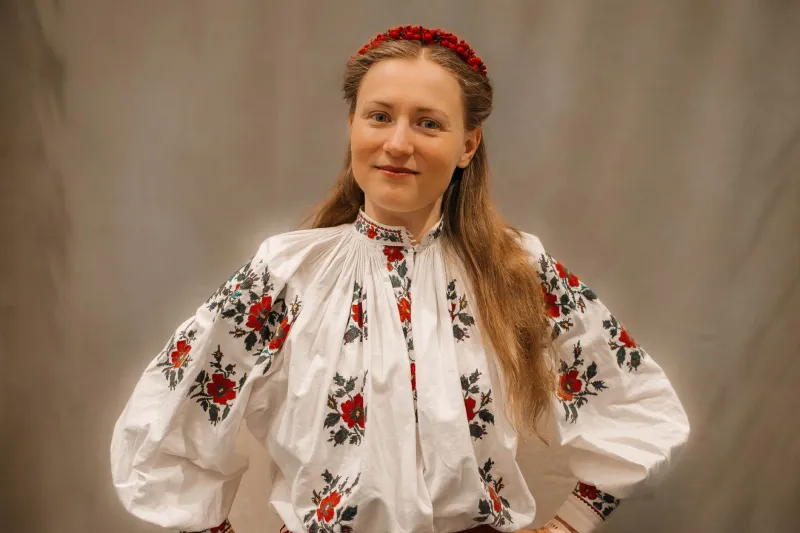
Somewhere in a small studio in Brooklyn, a woman is spending four hours embroidering a single collar. Somewhere in rural Pennsylvania, another is hand-stitching appliquéd roses onto the bodice of a cotton dress that will take three weeks to complete. And somewhere on your Instagram feed, you've almost certainly stopped scrolling at a photo of a blouse covered in hand-worked wildflowers and thought — I need that.
You're not alone. The resurgence of embroidery, appliqué, and hand-stitched embellishment in fashion right now is one of those cultural moments that feels both inevitable and deeply satisfying. After years of minimalism, after the relentless churn of fast fashion, after a pandemic that made a lot of us rethink what we actually wanted to own — the pendulum has swung hard toward the handmade, the intricate, the slow.
And honestly? It's about time.
What's Actually Driving the Embellishment Renaissance
Let's talk about the why, because it's more interesting than just "trends cycle." Millennial and Gen Z women — groups that get painted as opposites in every think piece ever written — are actually converging on something real here. Both cohorts are pushing back against disposability. Both are increasingly drawn to pieces with a story, with visible human labor baked into their construction, with the kind of detail that a garment worker had to slow down for.
There's also a TikTok-and-Pinterest effect at play. Cottagecore, dark academia, vintage revival aesthetics — all of them lean heavily on embellished, romantic, handmade-looking pieces. A generation that grew up with algorithmic feeds has developed a hunger for the tactile, the imperfect, the things that couldn't have been generated by a machine.
And then there's the simple truth that embroidered and appliquéd pieces are just beautiful in a way that a plain blouse isn't. Beauty matters. We're allowed to say that.
A Brief, Delightful History of Women and Needlework
Embroidery has been a female art form for so long it's basically inseparable from the history of women's fashion. In colonial America, young women learned embroidery as a foundational skill — not just decorative busywork, but a genuine craft with technical complexity and regional traditions. By the Victorian era, heavily embellished clothing was a signifier of both wealth and femininity, with entire industries built around the production of lace, beadwork, and embroidered trims.
The 1960s and '70s brought folk embroidery into the mainstream — Mexican peasant blouses, Indian mirror-work tunics, the kind of freely embroidered denim that defined a generation of American women who wanted their clothes to feel handmade and personal. Every few decades, the impulse returns. We keep coming back to it because it connects us to something — to craft, to patience, to the idea that a piece of clothing can be made with love.
Spotting Quality: The Real Thing vs. the Cheap Knockoff
Here's where we have to get practical, because the commercial fashion industry has noticed this trend and responded with machine-printed "embroidery" effects, heat-transfer appliqués, and embroidered patches that start peeling after three washes. Knowing the difference protects both your wallet and your wardrobe.
Real embroidery has texture you can feel on both sides of the fabric. Flip a garment inside out — you should see the back of the stitches, often in a slightly messy, organic pattern. Machine embroidery will look very uniform and mechanical; hand embroidery has slight variations in stitch tension and spacing that are actually a feature, not a flaw.
Quality appliqué is stitched down at the edges, not just glued. Pull gently at a corner — it shouldn't lift. The fabric used for the appliqué piece itself should be a similar weight and quality to the garment fabric; mismatched materials are a sign of corner-cutting.
Beading and sequin work should be individually sewn, not strung on a backing that's then attached to the fabric. Check that each bead or sequin has its own thread securing it. A single snag shouldn't unravel a whole section.
Ask about the maker. Indie brands and artisan sellers who do genuine hand embroidery will almost always tell you about it — it's their competitive advantage and their pride. If a brand is vague about production, assume machine work at minimum.
Indie Brands and Artisan Makers Worth Knowing
The most exciting embellishment work right now is coming from small, independent makers rather than the big fashion houses (though high fashion has certainly taken notice — Doen, Magnolia Pearl, and the entire cottagecore-adjacent indie space are doing gorgeous things).
Etsy remains a genuinely excellent source for hand-embroidered pieces, particularly from makers in Eastern Europe, Mexico, and India where embroidery traditions are deeply rooted and the craft is passed down through families. When buying internationally, look for shops with detailed process photos, long shop histories, and reviews that specifically mention quality over time.
For American-made pieces, look to craft fairs, local boutiques, and makers who are transparent about their process. A $180 hand-embroidered blouse from a maker who shows you her studio is a completely different proposition from a $35 "embroidered" blouse from a fast-fashion retailer.
How to Wear Embellished Pieces Without Overdoing It
The golden rule with heavily embellished clothing is the same one your most elegant friend follows instinctively: let the piece be the statement. A beautifully embroidered blouse wants simple, quiet companions — a plain linen skirt, straight-leg trousers, a solid-color cardigan. Stacking embellishment on embellishment creates noise; one exquisite piece creates poetry.
Embroidered collars and cuffs are the easiest entry point if you're new to this. They add enormous personality to a simple dress or blouse without overwhelming your whole look. Appliquéd pieces tend to work best when the placement is intentional — a single motif at a hem, a cluster of flowers at a shoulder, rather than all-over print.
And please, wear these pieces. Don't save them. The whole point of a garment made with someone's careful attention is that it gets lived in.
The Bigger Picture
Choosing an embroidered, hand-stitched, or appliquéd piece over its fast-fashion equivalent is a small act with real meaning. It says you value the time it took to make something beautiful. It says you're interested in owning things that last. It says you understand that a piece of clothing can be more than a trend cycle placeholder — it can be a small work of art.
That's not a bad thing to say about yourself, one stitch at a time.