Slips, Sheerness, and the Art of Showing Just Enough

For most of the 20th century, showing your slip was a wardrobe malfunction. Women carried safety pins in their purses specifically to prevent it. The goal was containment — underpinnings were infrastructure, not aesthetic, and the idea of letting them show was somewhere between embarrassing and scandalous.
Something has shifted. And honestly? It's about time.
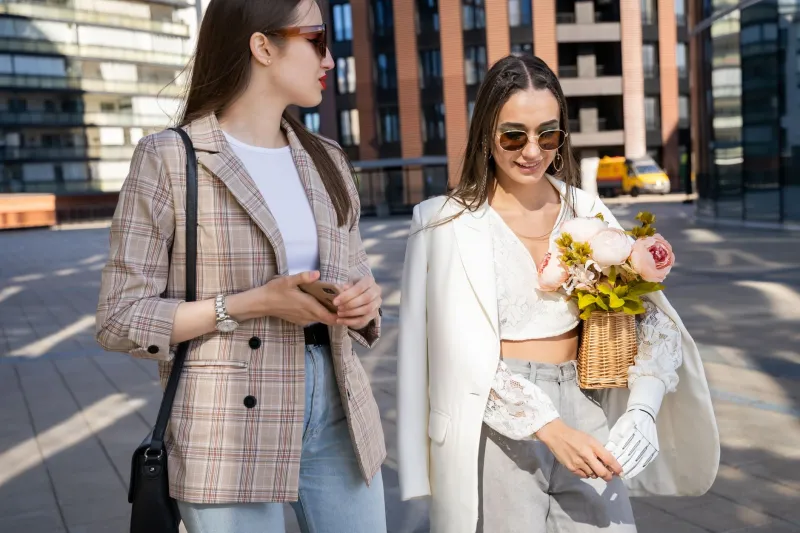
Right now, some of the most interesting dressing happening on American streets, in offices, and at dinner tables involves the very deliberate exposure of things that were once hidden. Slip dresses layered over fitted white t-shirts. Lace-trimmed camisoles worn as tops, untucked and unbothered. Sheer organza blouses over satin bralettes that coordinate rather than hide. The visible slip, the strategic lace panel, the intentional sheerness — these are no longer accidents. They're choices. Confident, considered, slightly subversive choices.
And I think they're worth talking about.
What We Actually Mean by "Visible Lingerie Details"
Let's be clear about what this trend encompasses, because it's more nuanced than just wearing your underwear on the outside.
At its most wearable, this aesthetic shows up as a satin or lace-trimmed slip dress layered over a ribbed white tee — the kind of combination that feels effortlessly French and thoroughly modern at the same time. It's also the sheer chiffon blouse worn over a contrasting camisole where both layers are equally visible and equally intentional. It's the midi skirt with a lace hem that dips just below the hemline, or the dress with a sheer yoke that reveals a bit of shoulder without revealing much else.
This is not about exposure for exposure's sake. It's about the layering of textures, the interplay between what's covered and what's suggested, and the very particular confidence that comes from dressing like you made every single decision on purpose.
The History Nobody Talks About
Here's the thing about lingerie-inspired fashion: it has a long, complicated, genuinely interesting history that goes far beyond the 1990s slip dress revival (though yes, Kate Moss in that gold Liza Bruce dress was a moment).
The Edwardian era was full of lace-trimmed undergarments that occasionally peeked above necklines — not as a fashion statement, but because the construction of the garments made it inevitable. By the 1920s, as silhouettes dropped and fabrics thinned, the line between outerwear and innerwear started genuinely blurring. The bias-cut satin gowns of the 1930s were essentially structured slips worn as eveningwear, and they remain some of the most beautiful garments ever made.
What's different now is the intention. We're not showing our slips because the safety pin gave out. We're showing them because we decided to, and that distinction changes everything.
The Confidence Paradox
Here's where it gets interesting from a cultural standpoint: the visible slip aesthetic is simultaneously more vulnerable and more powerful than conventional covered dressing.
There's an argument — and I find it pretty compelling — that deliberately showing the things that were once considered secret is a form of reclamation. When a woman wears a lace-trimmed camisole as a top and walks into a meeting or a dinner with complete assurance, she's not being careless. She's making a statement about who gets to define what's appropriate, what's intimate, and what's simply beautiful.
This is fashion that refuses to be embarrassed. And in a cultural moment when women's choices about their own bodies and clothing continue to be heavily scrutinized, there's something genuinely meaningful about dressing in a way that says: I see exactly what I'm doing, and I'm doing it anyway.
That said, I want to be careful not to over-intellectualize what is, at its core, also just really pretty. Lace is beautiful. Satin is beautiful. The way a silk slip moves differently than the cotton layer beneath it is visually interesting and tactilely satisfying. Sometimes a trend resonates because it looks good, and this one does.
How to Actually Pull This Off
If you're intrigued but not sure where to start, here are some ways to try this aesthetic that feel intentional rather than accidental.
Start with the slip-over-tee. This is the entry point for a reason. Take a satin or silky slip dress in any length and layer it over a fitted white or neutral ribbed t-shirt. The contrast between the casual cotton and the dressy satin is exactly the tension that makes this look work. Keep everything else simple — flat sandals or loafers, minimal jewelry.
Try a sheer layer as a top. A sheer organza or chiffon blouse worn over a coordinating camisole (not hidden, coordinating — think same color family or intentional contrast) is both elegant and modern. This works beautifully for office environments where you want to look polished but not buttoned-up.
Let the hem show. If you have a lace-trimmed slip or a longer lace-hem garment, try layering a slightly shorter skirt or dress over it and letting that lace hem peek out at the bottom. This is the most subtle version of the trend and one of the most charming.
Coordinate, don't match. The key to making visible underlayers look intentional is ensuring they relate to the rest of the outfit in some way — through color, texture, or mood — without perfectly matching. Perfect matching reads as costume. Thoughtful coordination reads as style.
Own the choice. This one isn't about the clothes at all. The visible slip aesthetic only works when the person wearing it looks like she knows exactly what she's doing. If you're tugging at your hem or crossing your arms, the look falls apart. Wear it like a decision, because it is one.
A Note on Modesty
This trend will make some people uncomfortable, and that's worth acknowledging. The concept of modesty is deeply personal and often culturally or religiously informed, and there's no universal right answer about how much to show.
What I'd push back on is the idea that visible lingerie details are inherently immodest. A sheer blouse over a fully covered camisole reveals less than a sleeveless sundress. A slip dress layered over a t-shirt covers more than a bodycon mini. The discomfort, I think, comes not from actual exposure but from the reference — the fact that these garments look like lingerie, even when they cover everything.
And maybe that's exactly the point. Maybe the most interesting thing about this trend is that it makes us examine why we're uncomfortable in the first place.