Why the Most Beautiful Pieces You Own Are Also the Smartest Ones
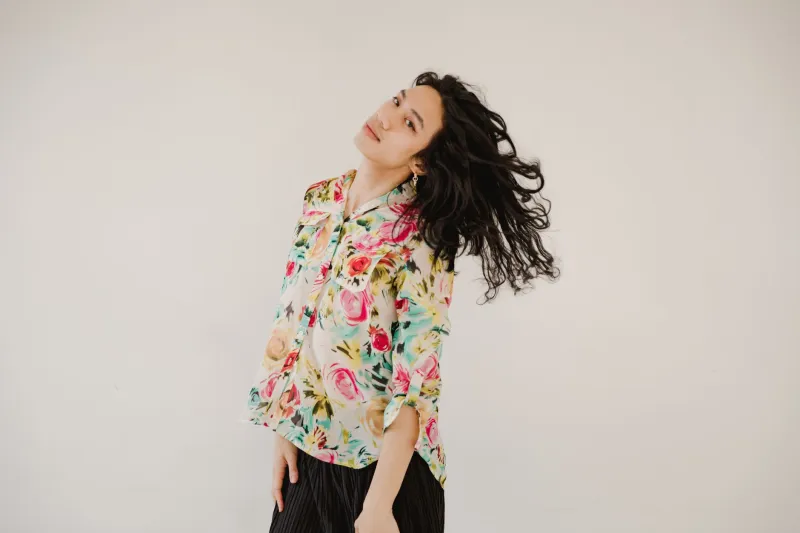
There's a blouse in my mother's closet that she bought in 1987. French cotton, hand-sewn pintucks down the front, pearl buttons that have never lost their luster. She wore it to her first job interview, to my parents' anniversary dinner, to my college graduation. It still fits. It still looks extraordinary. And if you asked her what it cost per wear at this point, the number would be almost laughably small.
That blouse is what the fashion industry calls an "heirloom piece" — though most women who own something like it don't use that term. They just know that some things are worth keeping forever.
The Math That Changes How You Shop
Cost-per-wear is one of those concepts that sounds like accounting but is actually one of the most liberating ideas in fashion. The formula is simple: take what you paid for something and divide it by the number of times you've worn it. A $30 trendy top you wear twice has a cost-per-wear of $15. A $300 silk blouse you wear 150 times over ten years has a cost-per-wear of $2.
When you start thinking this way, the math on quality changes fast.
And it's not just about the numbers. There's a psychological dimension too. When you've invested meaningfully in a piece, you treat it differently. You hang it properly. You follow the care instructions. You repair it when something small goes wrong instead of tossing it. The investment creates the behavior that makes the investment worthwhile — a genuinely virtuous cycle.
For feminine, romantic pieces specifically, this math is especially favorable. A beautiful Liberty print dress, a well-constructed lace blouse, a silk charmeuse skirt — these aren't trend-dependent items that expire when the season changes. Their appeal is rooted in something older and more durable than trends: the enduring human love of beauty, softness, and craft.
What Makes a Piece Heirloom-Worthy
Not every expensive item is worth the investment, and not every affordable item is a waste of money. The question is quality — and quality has specific, identifiable markers that you can learn to spot.
Fabric is the starting point. Natural fibers — silk, cotton, linen, wool — age better than synthetics. They breathe, they can be cleaned and refreshed, and they tend to soften beautifully over time rather than pilling or degrading. When a garment is made in a fabric you'd be happy to wear in thirty years, that's a good sign.
Construction tells you everything. Turn the piece inside out. Are the seams finished? Are they generous enough to allow for alterations? Are the buttons sewn on with enough thread to actually hold? Flat-felled seams, French seams, and bound buttonholes are all signs of a maker who cared about longevity. Serged edges and glued embellishments are signs of a maker who didn't.
Details that are built in, not applied. Embroidery that's part of the fabric, pintucks sewn into the garment's structure, lace that's attached with actual stitching — these details last. Appliqués that are ironed on, sequins that are glued, trim that's loosely tacked — these fall apart. Romantic and feminine details can absolutely be heirloom-quality; the question is how they're made, not what they are.
Silhouettes that transcend seasons. A gathered midi skirt. A softly-structured blazer with feminine buttons. A wrap dress in a classic floral. These shapes have appeared and reappeared throughout fashion history because they work — on different body types, in different decades, for different occasions. They're not immune to trends, but they're not defined by them either.
The Emotional Economy of Clothing
Here's something the fashion industry doesn't talk about nearly enough: the emotional value of clothing is real, and it compounds over time just like financial value does.
Clothing that has been present for significant moments in your life becomes something more than fabric. It becomes a record. A memory you can touch.
Several women in our Ruffles & Bloomers community have shared their own versions of this. One reader in Charleston, South Carolina described a smocked Liberty print dress she bought for her daughter's first birthday party. Fifteen years later, her daughter — now a teenager — still asks to see photos of that day, and the dress is still hanging in the closet, waiting for whenever it might be wanted again.
Another reader in Portland, Oregon talked about her grandmother's collection of silk blouses, carefully wrapped in tissue in a cedar chest. "I wear one every Thanksgiving," she wrote. "It's not practical. But it makes me feel like she's still at the table."
This is the emotional economy of quality clothing. You can't put a number on it, but it's as real as any financial return.
Sustainability: The Argument You Didn't Know You Were Making
Buying fewer, better pieces is also one of the most concrete individual actions you can take toward a more sustainable wardrobe. The fast fashion industry is one of the most significant contributors to global textile waste — Americans alone discard roughly 11.3 million tons of clothing per year, according to the EPA.
When you buy a piece with the intention of wearing it for decades, you're opting out of that cycle. You're voting, with your wallet, for a different kind of fashion economy — one where craft is valued, where materials are treated with respect, and where clothing is made to last rather than made to be replaced.
This doesn't require a dramatic lifestyle overhaul. It just requires a shift in the question you ask when you're shopping: instead of "Do I like this?" try "Will I still love this in ten years?" That single reframe changes almost everything.
How to Start Building Your Own Heirloom Wardrobe
You don't need to spend a fortune all at once. Building an heirloom wardrobe is a long game, and it's one you can play at whatever pace suits your life and budget.
Start with one piece that genuinely moves you — something in a fabric you love, a silhouette that flatters you, a detail that makes you happy every time you see it. Buy it well. Care for it properly (hand wash or delicate cycle, lay flat to dry, store with intention). Wear it often and with joy.
Then do it again. And again.
Over time, you'll find yourself with a closet that's smaller than it used to be and more beautiful than it's ever been — full of pieces that have stories, that have proven themselves, and that you genuinely can't imagine parting with.
That's not just a wardrobe. That's an inheritance in the making.